How gentle somatic learning in yoga can support recovery and continued active living
When pain persists or familiar activities become difficult, it can feel as though age has finally caught up with us. Discomfort comes and goes in seemingly mysterious ways. We understandably seek relief, sometimes with a growing fear that our lives are becoming smaller.
These moments can also become turning points. Alongside appropriate medical care, we can explore how we have adapted to difficulty and whether those adaptations still serve us. Some possibilities may be less accessible than they once were. Others may be waiting to be rediscovered.
This is why somatic learning informs our yoga practice. It means learning through the felt experience of movement, noticing how we organize effort and what changes as we explore another way. Strength and flexibility matter. So does the way we use them.
People often come to yoga expecting to stretch tight muscles or work harder at strengthening weak ones. In my classes, I invite a shift in attention: how are we coordinating the movement? Where does effort help, and where might it get in the way?
That shift can be surprising. When someone wants to stretch farther, exploring a smaller movement may not feel like progress. Part of my work is helping students experience why we are taking that approach.
Developing greater capacity includes learning how to move differently.
Why this subtle, inner work matters
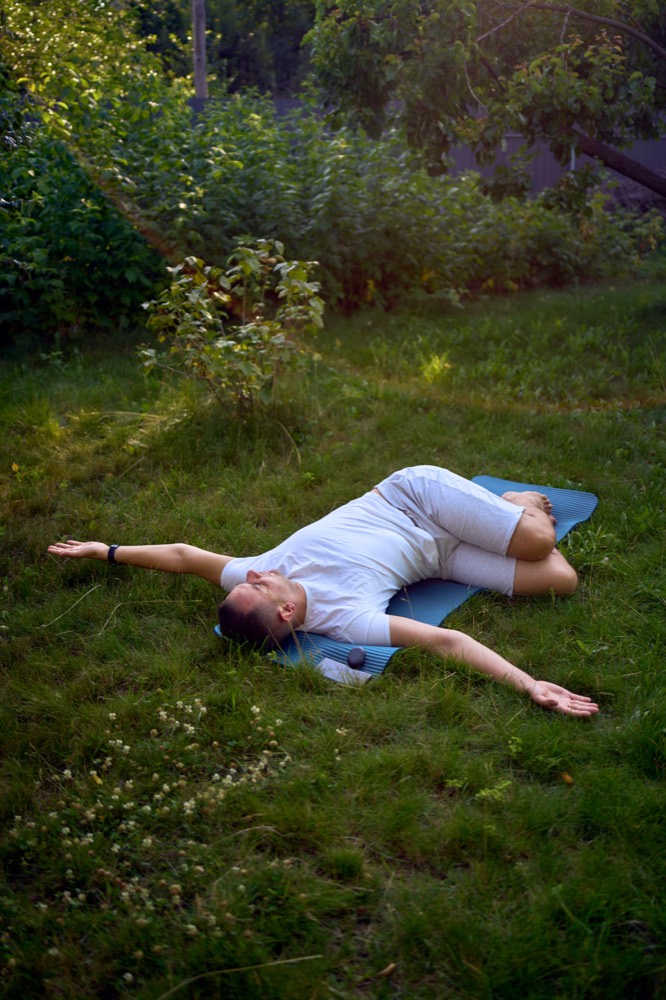
The practice is simpler to experience than it may sound. You begin with a comfortable movement and notice how it feels. There is no need to master the terminology.
We enter a somatic learning mode when we become curious about the felt experience of moving. The language of the body is sensation. We feel where effort gathers and what changes when we move another way. Those felt differences guide the next movement. Learning takes place through the experience itself.
Slowing down gives us time to bring mindful attention to a familiar movement. We begin to feel details that usually pass unnoticed. Perhaps we hold our breath before the movement even begins. Perhaps the effort increases, but very little else happens.
These responses are not necessarily mistakes. Some developed to help us manage an injury or meet a particular demand. A response that once helped us can become habitual, even after circumstances change. We may grow stronger while continuing to rely on it.
Somatic education makes those habits available for exploration. Rather than focusing only on the tight or uncomfortable spot, we pay attention to how the whole movement happens. Is one area doing nearly all the work? What happens when another part of the body begins to participate?
We vary a movement and notice the difference. Then we have something specific to learn from. Less effort can make a distinction easier to feel, giving us an opportunity to practice an alternative.
Gentle movement gives us room to sense more clearly. Awareness becomes part of the practice: what we notice helps guide the next movement.
Standing differently without practicing “standing straight”
In my classes, someone may spend an hour exploring gentle bending and releasing, then stand up and feel more upright. They have not spent the hour pulling themselves into better posture. Yet standing feels different, perhaps easier.
That experience deserves attention. Explaining it only as muscles being stretched longer leaves out the possibility of changes in how we sense ourselves and coordinate muscular effort.
The nervous system continually uses sensory information to guide movement. Research shows that preceding muscle contractions can alter signals associated with our sense of position. That does not identify the precise cause of a student’s experience after class, but it helps explain why movement involves much more than the mechanical length of a muscle. Research on muscle conditioning and position sense
In practice, we explore those relationships through movement. Instead of prescribing an ideal posture and asking someone to hold it, we give them opportunities to discover a different way of organizing themselves.
An immediate difference is a beginning. The next question is how to make that discovery available in everyday life.
More than stretching farther
Stretching can improve range of motion. But how much range we have and how we use it are different questions.
Consider turning to look behind you. The familiar instinct might be to isolate the neck and stretch it farther, treating the restriction as a local problem. In class, we might instead explore how the ribs participate or what changes when we allow our weight to shift.
The neck still moves. Its task changes because more of you participates.
This is the distinction I want students to experience. We are exploring coordination, rather than assuming that every limitation calls for more length in a particular muscle. A movement that feels restricted may offer other possibilities when we change how its parts work together.
Sometimes that means setting aside the urge to reach an endpoint. We become interested in what happens along the way. The question “How far can I go?” opens into “How can this movement work better?”
There is research supporting the value of movement learning. In a randomized trial involving people with chronic low-back pain, individualized training in everyday movement skills improved function more than a strength and flexibility program, with benefits maintained through a year of follow-up. This was a rehabilitation study, rather than a study of somatic yoga, but it gives substance to the idea that how we learn to move can make a meaningful difference. Read the study

Bringing the learning into life
A discovery in class becomes meaningful when it changes an ordinary moment. Reaching into a cupboard may feel less effortful. An activity you had started to avoid may become something you feel ready to explore again.
This is where the work reaches beyond fitness measures. We are interested in what our practice makes possible in our lives.
Relief matters. So does understanding more about how we move when difficulty appears. Alongside attending to symptoms, we can become curious about habitual effort and the ways we have learned to protect ourselves. Some of those responses may still be useful. Others may be ready to change.
Progress varies, and some limitations need ongoing care. Even then, there may be room to develop a different response to difficulty. We can respect what we are experiencing without assuming that every restriction is permanent.
Over 35 years of teaching yoga and exploring contemporary approaches to movement education, I have continued to return to this question: how can practice help us participate more fully in our lives?
Our yoga and somatic movement classes offer a place to explore that question through your own experience. There is time to notice and work at your own pace.
A deeper resilience can grow from discovering that our response to change can itself change. We may find possibilities where we had begun to expect only further limitation. That is something worth practicing.
For a closer look at the approach behind our classes, read How Posture and Somatic Movement Inform Our Yoga Practice.